








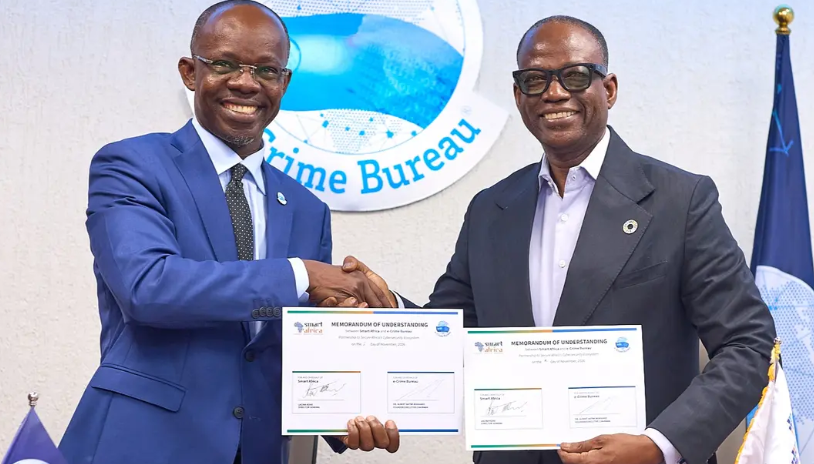
Cybersecurity consulting firm e-Crime Bureau has signed a Memorandum of Understanding (MoU) with Smart Africa to advance cybersecurity capacity, workforce development and digital security governance across the continent.
The agreement, signed in Accra, Ghana, on November 2, 2026, establishes a framework for collaboration in strengthening Africa’s cybersecurity workforce, promoting cooperation among governments and private-sector organisations, and improving the protection of critical information infrastructure.
Under the partnership, both organisations will focus on developing cybersecurity skills and expertise, while encouraging greater engagement between African governments, the private sector and the international community.
READ ALSO: NVIDIA APPOINTS CFO COLETTE KRESS NEW INTERIM CHIEF EXECUTIVE
The collaboration will also address cybersecurity governance, risk management, critical information infrastructure protection, and the harmonisation of legal and policy frameworks. Another priority is supporting the development and deployment of technologies and solutions designed to protect Africa’s growing digital ecosystem.
The partnership comes as Smart Africa advances a coordinated continental approach to cybersecurity. Its ongoing efforts include the development of the Continental Cybersecurity Blueprint in 2023 and the current development of a Continental Cybersecurity Monitoring and Evaluation Framework.
These initiatives reflect the importance of strengthening cybersecurity coordination as African countries expand digital services, infrastructure and economic activities. Greater policy alignment, technical capacity and collaboration will be important in addressing cyber threats that extend across national borders.
The Bureau’s delegation at the signing ceremony included its Executive Chairman, Board representatives and selected members of its Consulting Leadership.
Through the partnership, e-Crime Bureau and Smart Africa aim to contribute to a more coordinated cybersecurity environment in Africa, with emphasis on skills development, institutional collaboration, stronger governance and the protection of the continent’s digital infrastructure.


