






Alexandra Olive Naa Korkoi Mensah
As global leaders prepare to meet in Doha, Qatar, Ghana has an opportunity to advance a digital agenda that places people, opportunity and inclusion at its centre.
For a young Ghanaian learning to code or a family without reliable mobile connectivity, digital transformation means opportunity, improved livelihoods and participation in a connected world.
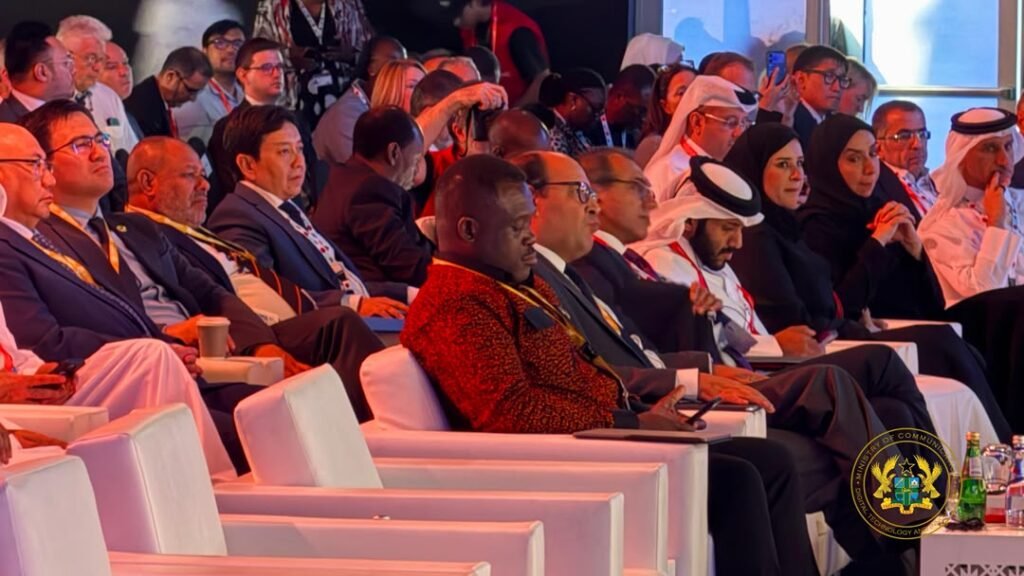
This is the broader context for the International Telecommunication Union’s (ITU) Plenipotentiary Conference, PP-26, scheduled for November 9 to 27, 2026, in Doha.
PP-26, the ITU’s highest policy-making conference, will determine its strategic direction, elect leadership and approve strategic and financial plans for 2028 to 2031. Ghana can help ensure global priorities reflect African development needs.
Connectivity Must Create Opportunity
Affordability, inadequate infrastructure, limited devices and insufficient digital skills continue to keep many people from meaningful internet access.
Ghana’s Rural Telephony Project, implemented through the Ghana Investment Fund for Electronic Communications (GIFEC), is helping address connectivity gaps in underserved communities. The project has a target of 460 sites for 2026. According to the Ministry’s project status figures, 245 sites have been completed, while 49 are at various stages of completion.
As of September 2026, 1,250 sites had been integrated into the core network, of which 836 were operational and “On Air”.
The goal is to bring voice and data services to underserved communities. Coverage must also mean affordable, reliable service and meaningful use.
Building Skills for a Digital Economy
Digital infrastructure must be matched by skills to use technology, develop solutions and compete.
Ghana’s One Million Coders Programme (OMCP), a flagship government initiative, aims to equip citizens with practical digital skills for employment, entrepreneurship and innovation. The pilot trained 859 young Ghanaians across four locations, and 20,000 laptops were procured for national implementation.
The latest programme figures show 141,954 registered accounts and 42,567 learners admitted to active courses. Of those admitted, 27,782 learners, representing 65.3 per cent, have started and are actively engaging, while 8,973, or 21.1 per cent, are yet to begin. The programme has issued 46,330 certificates.

Its learning network continues to expand, with 107 Centres of Learning operational out of 118, representing 91 per cent. Eleven universities have signed Memoranda of Understanding with government to integrate programme certifications into degree and diploma programmes.
Learners are accessing courses through partners including Coursera, StartoCode and Cisco Networking Academy. Cybersecurity currently leads course enrolments with 8,570 learners, followed by Data Analytics with 6,475, AI Essentials with 4,495, AI Professional with 4,157 and Project Management with 4,077.
Ultimately, participation must translate into jobs, entrepreneurship and productivity.
Preparing for Artificial Intelligence
AI is transforming education, healthcare, agriculture, business and public administration. Ghana must develop and adapt technologies to local needs, not merely consume them.
The Ghana National Artificial Intelligence Strategy 2025–2035 and the planned US$250 million investment in an AI Computing Centre reflect the country’s ambition to strengthen its AI ecosystem. This requires connectivity, computing infrastructure, skills and governance that protects privacy, security and human rights.
According to the Minister for Communication, Digital Technoligy and Innovations, Hon Samuel Nartey George (MP), “Ghana’s digital future cannot be defined by connectivity alone. We must ensure that our people have access to reliable and affordable digital services, the skills to use technology productively, and the opportunities to innovate and compete in the global digital economy.”
Africa Must Shape Its Digital Future
PP-26 offers Africa a platform to strengthen its voice in global telecommunications governance. Decisions on spectrum, satellites, standards and emerging technologies will shape connectivity and participation in the digital economy.
ALSO READ: GHANA CALLS FOR GLOBAL PARTNERSHIPS TO DEMOCRATIZE ACCESS TO AI AND DIGITAL INFRASTRUCTURE
African countries must shape these frameworks. Ghana’s engagement should secure partnerships, investment, technical capacity and opportunities for innovators.
Beyond Doha: Delivering Results
PP-26’s significance will be measured by the outcomes international cooperation delivers, not attendance or declarations.
For Ghana, success means rural communities gaining reliable connectivity, digital skills programmes creating pathways to productive work, and emerging technology investments generating meaningful opportunities. Government, businesses, universities and innovators must help build a sustainable digital ecosystem.
As leaders gather in Doha, Ghana can help advance a digital future that is inclusive, resilient and responsive to developing economies. The real test begins after the conference: turning global ambitions into meaningful national progress.
Editor’s Note: Alexandra Olive Naa Korkoi Mensah is the Head, Public Relations, Ministry of Communication, Digital Technology and Innovations, Ghana.