













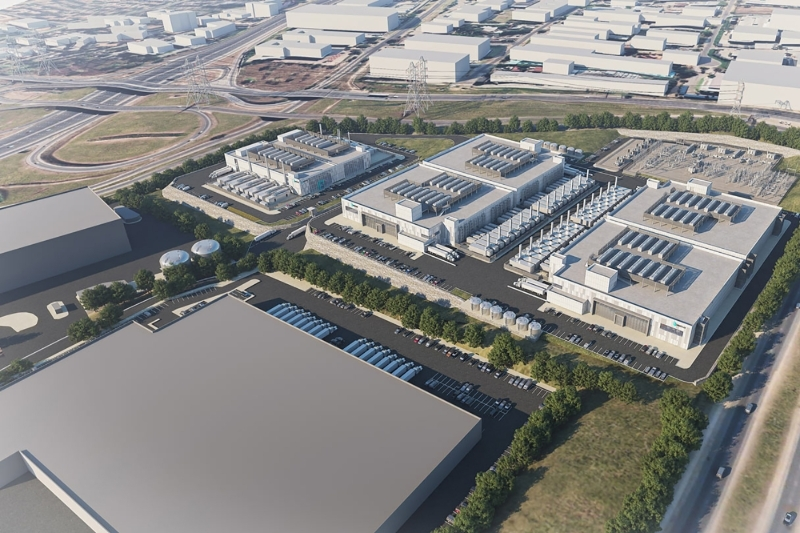
According to International Finance Corporation (IFC)’s “Emerging Markets Insight”, the rapid expansion of artificial intelligence (AI) investment into emerging markets is creating new opportunities for economic transformation, but it is also placing growing pressure on electricity, water, and other critical infrastructure,
The IFC noted that data centers and digital infrastructure are becoming critical foundations for countries seeking to participate in the AI-driven economy, alongside skilled human capital, access to finance and supportive regulatory frameworks.
However, the organisation cautioned that the pace of AI infrastructure expansion could create significant challenges for emerging markets if supporting infrastructure fails to keep pace.
Rising Energy Demand Raises Infrastructure Concerns
Data centers have emerged as some of the fastest-growing consumers of electricity globally. According to the International Energy Agency (IEA), global data center electricity demand has increased by approximately 12 percent annually since 2017, more than four times the rate of overall electricity consumption growth.
READ ALSO: NEERAJ PRADHAN: ENGINEERING KENYA’S DIGITAL FUTURE, BUILDING AFRICA’S BACKBONE
The IEA projects global data center electricity consumption to more than double to 946 terawatt-hours (TWh) by 2030, driven largely by the United States and China, alongside significant growth in emerging markets.
For developing economies with already constrained electricity systems, the IFC warned that growing AI-related demand could intensify pressure on national grids, potentially resulting in power outages, higher electricity costs and competition for reliable electricity between data centers and other users.
The expansion of AI infrastructure will therefore require coordinated investment in electricity generation, grid capacity, transmission networks and renewable energy.
An International Monetary Fund study cited by the IFC estimates that if electricity supply fails to keep pace with rising demand, AI-driven consumption could contribute to an 8–9 percent increase in retail electricity prices by 2030.
Water and Environmental Risks
Energy is not the only infrastructure concern. Large-scale data centers also require significant volumes of water for cooling, with some facilities consuming billions of litres annually.
The IFC highlighted that water availability could become an increasingly important consideration in developing economies facing water stress, particularly as advanced computing systems increasingly adopt liquid-cooling technologies.
The rapid expansion of data centers could also make it more difficult for some emerging markets to meet emissions-reduction targets.
In Southeast Asia, for instance, data-center growth remains heavily dependent on fossil-fuel-generated electricity. Citing Ember’s 2025 analysis, the IFC noted that operational emissions from data centers in Malaysia and Indonesia could rise severalfold by 2030 despite clean-energy commitments.
The environmental impact extends beyond carbon emissions, with new power-generation facilities, transmission networks and cooling infrastructure potentially contributing to land-use changes, biodiversity loss and increased water stress.
AI Investment Creates Broader Economic Opportunities
Despite these risks, the IFC said investment in AI infrastructure could generate significant development benefits for emerging markets.
While data centers provide the physical infrastructure required to power AI, much of the economic value is expected to come from the software, services and applications built on top of these systems.
AI adoption could improve productivity by expanding access to data, analytics, automation and digital services. It could also accelerate digital transformation, strengthen workforce capabilities and create new areas of economic activity.
The impact, however, is unlikely to be evenly distributed. AI may increase demand for highly skilled workers while reducing demand for some lower-skilled roles, potentially contributing to wage polarisation and increasing the need for labour-market policies that help workers adapt to technological change.
Data Centers Can Catalyse Digital Ecosystems
Beyond direct productivity gains, investment in AI infrastructure could attract complementary industries, including software development, cybersecurity, cloud computing and AI research.
Data centers can also generate local economic activity through construction, supply-chain demand and government revenues. However, the IFC noted that employment gains can be concentrated largely in the construction phase, while rapid infrastructure development may contribute to higher land prices and environmental pressures.
The IFC emphasised that these benefits are not automatic. Building digital infrastructure creates the foundation for participation in the AI economy, but meaningful economic impact depends on widespread adoption by businesses and public institutions.
This requires countries to complement infrastructure investment with affordable digital access, strong digital skills, reliable supporting infrastructure and predictable regulatory and data-governance frameworks.
For emerging markets, the challenge therefore lies in ensuring that the AI investment boom does more than expand computing capacity. The greater opportunity is to build an ecosystem in which digital infrastructure translates into higher productivity, new businesses, skilled employment and broader economic inclusion—while managing the energy, water and environmental pressures that accompany rapid AI expansion.


