



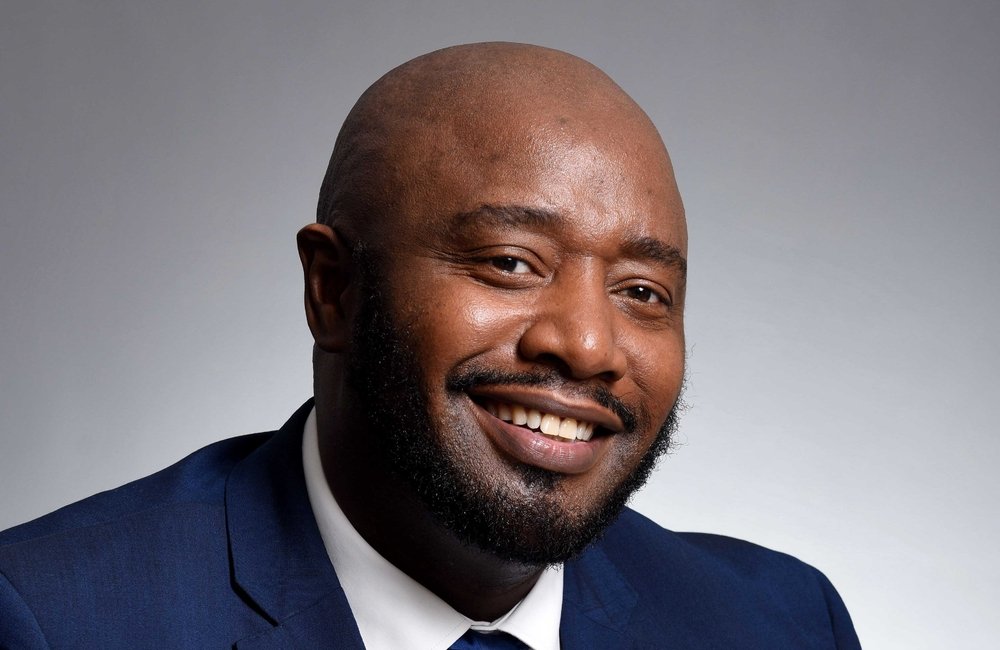
Sanlam has appointed its Group Chief Technology and Information Officer, Theo Mabaso, as Group Chief AI Officer, marking a strategic shift to position artificial intelligence at the centre of its operations and long-term growth.
The appointment places Mabaso on the Group Executive Committee (Exco), where he will drive AI as a key lever for competitiveness, operational efficiency, and organisational resilience across the Group.
Sanlam said the move reflects its commitment to embedding AI across its businesses—from underwriting and claims processing to client engagement and financial advisory—while maintaining strong governance and ethical oversight. Although the Group has already recorded progress in AI adoption, the new role introduces dedicated leadership, clearer accountability, and revised capital allocation to accelerate impact.
Mabaso will retain his position as Group Chief Technology and Information Officer, having previously led the modernisation of Sanlam’s technology infrastructure and laid the groundwork for enterprise-wide AI adoption. In 2025, he also served on the B20 South Africa Digital Transformation Task Force, contributing to efforts aimed at leveraging digital technologies for inclusive growth across Africa.
AI as a Strategic Imperative
Sanlam Group CEO, Paul Hanratty, said artificial intelligence has become central to the future of financial services.
“AI has moved beyond experimentation. It is now central to how financial services companies compete, innovate and deliver to their clients,” he said.
“At Sanlam, we aim to maintain and strengthen our position as a digitally enabled insurance market leader in Africa, and in fast-growing markets in Asia. With Theo’s appointment, we are ensuring that artificial intelligence is developed responsibly and used to strengthen our competitive muscle, innovation and enhanced customer experiences across the organisation,” Hanratty added.
He further emphasised AI’s role in expanding financial inclusion and improving customer outcomes. “AI will have a major impact on Sanlam’s drive to help our customers live with financial confidence. It will expand access to financial tools, insights and advice, make financial knowledge more accessible and financial products more affordable,” he said.
Turning Data into Better Outcomes
Mabaso noted that the insurance sector is uniquely positioned to harness AI due to its data-intensive nature.
“Insurance is, in many ways, a data business masquerading as a financial one. We hold deep, trusted data that spans lifetimes,” he said.
“Artificial intelligence allows us to synthesise that knowledge in previously impossible ways, industrialising our ability to deliver better products, superior advice, and ultimately better financial outcomes,” he added.
He cautioned, however, that the use of AI must be guided by strict safeguards. “In our industry, the stakes are high. AI influences decisions that affect people’s financial security for years, sometimes decades. That means machine operable accuracy, codified controls, digitally executable fairness, explainability and robust oversight must always come first.”
Sanlam expects advancements in frontier AI models, declining inference costs, improved orchestration tools, and the rise of multi-agent systems to significantly impact underwriting, claims processing, product development, client engagement, and revenue generation across the organisation.
ALSO READ: CINCOZE UNVEILS ULTRA-COMPACT HIGH-PERFORMANCE DX-1300 INDUSTRIAL PC
Scaling AI Responsibly
According to Mabaso, establishing a dedicated Group-level AI leadership role will ensure innovation remains coordinated and aligned with long-term strategy.
“As AI adoption accelerates, the strategic risk is no longer premature adoption. The risk is structural drift – falling behind while competitors compound capability – and teams without alignment or shared standards,” he said.
“This role, and artifacts such as AI’s manifestation in the Group’s 2030 strategy, the office of AI, AI control tower, and our nerve centres ensures we are scaling AI in a disciplined way, with clear priorities, strong governance and a focus on delivering real value for clients,” he added.
Strengthening Adviser–Client Relationships
Sanlam emphasised that AI will complement, not replace, its human adviser network.
“The foundation of financial advice requires a human touch,” Mabaso said. “What AI will do is to collapse the end-to-end administrative and burdensome cycle times and materially change the human-in-the-loop operating economics, allowing advisers to use their time where they add the most value – their clients.”
Driving Inclusive Growth Through AI
Mabaso concluded that Sanlam is transitioning from experimentation to full-scale AI integration across its operations.
“Across the Group we are moving from optional innovation to industrial operating model transitions, from AI exploration to competitive leverage,” he said.
“We believe AI is poised to drive growth in Africa and in developing markets. It is a once-in-a-generation opportunity to scale financial tools across borders and continents, unlock inclusive growth, and ensure millions are included in the digital economy,” he added.
