










A business cannot serve its customers effectively when its emails stop working, employees cannot access documents or communication platforms become unavailable. For organizations that depend on digital tools to manage everyday operations, even a few hours of disruption can affect productivity and service delivery.
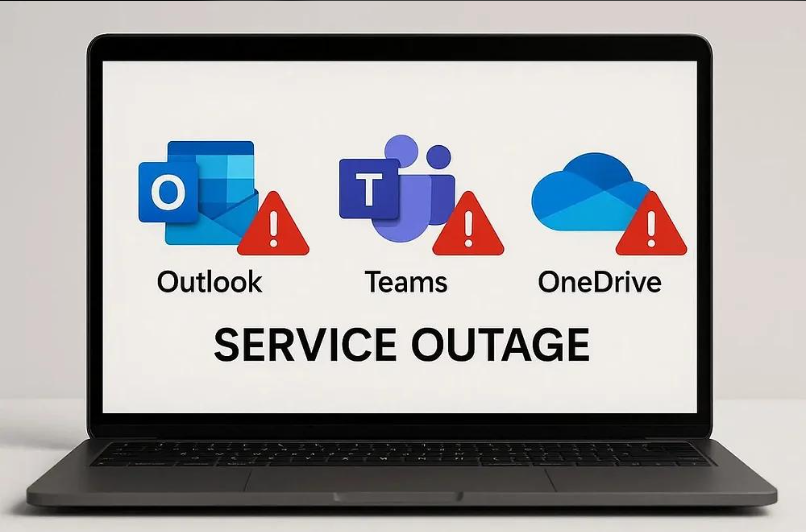
That was the situation following Microsoft’s global service disruption on November 12, 2026, which affected several Microsoft 365 services, including Outlook, Microsoft Teams, SharePoint Online and Copilot. The outage disrupted businesses and government organizations across different countries, exposing how deeply these platforms have become embedded in modern workplaces.
Beyond the technical failure, the incident raises a bigger question: How much of the global business environment has become dependent on a single technology provider?
When One Technology Failure Affects Thousands of Businesses
Microsoft’s productivity tools have become essential to organizations of all sizes. From small businesses managing customer communication to multinational companies coordinating teams across countries, services such as Outlook and Teams support daily business activities. When the disruption occurred, many users struggled to access emails, manage calendars and participate in virtual meetings.
According to reports, the outage lasted more than 12 hours, affecting organizations across several countries, including the United States, Japan and Australia. The disruption extended beyond individual applications because several Microsoft services depend on interconnected infrastructure, including Exchange Online. Microsoft attributed the incident to technical infrastructure problems and said it had no indication of malicious activity.

READ ALSO: e-CRIME BUREAU, SMART AFRICA PARTNER TO STRENGTHEN AFRICA’S CYBERSECURITY
Although service availability gradually improved, the incident demonstrated how a failure within one technology provider can create operational challenges for organizations worldwide. For businesses that rely on these platforms for essential activities, losing access is not simply an inconvenience; it can interrupt communication, delay decisions and affect service delivery.
The Hidden Risk of Depending on One Technology Provider
Cloud computing has made it easier for businesses to access software, storage and computing resources without investing heavily in physical infrastructure. However, relying on one provider for multiple essential services can create a concentration risk that organizations may overlook until something goes wrong.
For example, a company may use Outlook for emails, Teams for meetings and SharePoint for document management. Although these are separate applications, they are connected through Microsoft’s wider technology ecosystem. A problem affecting shared infrastructure can therefore disrupt several business functions simultaneously.
This does not mean businesses should abandon cloud services. Rather, they need to consider how dependent their operations have become on a single provider and whether they have reliable alternatives when that provider experiences an outage. The Microsoft incident is a reminder that even major technology companies are not immune to infrastructure failures.
Digital Transformation Must Include Business Continuity
Digital transformation is helping businesses automate processes, improve productivity and deliver services more efficiently. However, adopting digital tools should not be the only measure of progress. Organizations must also consider how well they can continue operating when those tools become unavailable.
Businesses need practical continuity measures, including alternative communication channels, independent data backups and documented recovery procedures. These arrangements should be tested regularly to ensure they can support operations during an actual disruption.
For instance, if a business loses access to its primary email platform, employees should know how to communicate, retrieve essential information and continue serving customers. Preparing for such situations should be part of digital transformation planning, rather than something organizations consider only after an outage occurs.
What This Means for Africa’s Digital Economy
Across Africa, businesses and governments are increasingly adopting cloud computing and digital platforms to support financial services, e-commerce, education, healthcare and public administration. These technologies create opportunities for economic growth, but they also expose organizations to risks associated with infrastructure failures and dependence on external technology providers.
The Microsoft outage highlights why African organizations must look beyond adopting global technology solutions and pay greater attention to infrastructure resilience. Investment in reliable connectivity, local data infrastructure, regional cloud capabilities and alternative service providers can help strengthen the continent’s ability to maintain essential digital services.
This also brings digital sovereignty into the conversation. It does not mean abandoning international technology providers, but ensuring that African countries and businesses have the infrastructure, policies and capacity to manage their digital assets and maintain critical operations when external systems experience disruptions.
The Bigger Question: What Happens When the Cloud Goes Down?
The Microsoft outage is not an argument against cloud computing. Cloud services remain important to modern businesses because of their flexibility, scalability and ability to make advanced technology more accessible. However, the incident challenges the assumption that moving operations to the cloud automatically guarantees reliability.
For technology providers, it reinforces the importance of infrastructure resilience, transparent communication and effective recovery mechanisms. For businesses, it raises the need to understand their technology dependencies and prepare for situations where critical services become temporarily unavailable.
Ultimately, the success of digital transformation should not be measured only by how much technology organisations adopt, but also by how prepared they are when that technology fails. The cloud has made businesses more connected, but the real test of digital resilience is whether they can keep moving when that connection is lost.

