







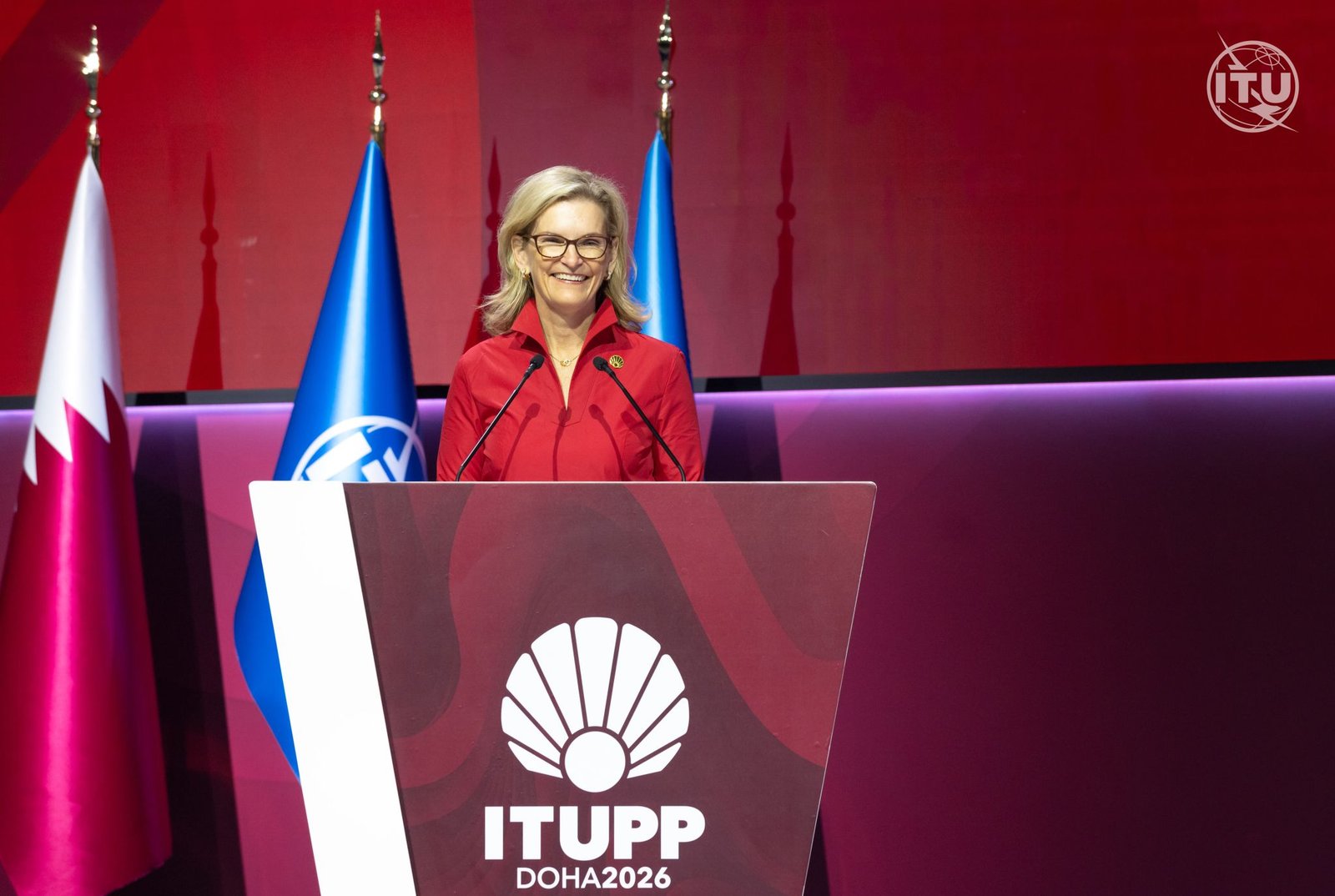
The International Telecommunication Union (ITU) has re-elected Doreen Bogdan-Martin of the United States as its Secretary-General, securing her a second term to lead the United Nations agency responsible for digital technologies and global telecommunications.
Expressing appreciation for the confidence of member states, Bogdan-Martin said the digital landscape had undergone significant changes during her first term and would continue to evolve rapidly. She reaffirmed her commitment to ensuring that technological progress benefits everyone, particularly the estimated two billion people worldwide who remain without internet connectivity.
First elected in 2022, Bogdan-Martin assumed office in 2023 after serving as Director of ITU’s Telecommunication Development Bureau from 2018 to 2022. With more than three decades of experience in international telecommunications policy, she is the first woman to hold both elected leadership positions within the organisation.
READ ALSO: ZEDVANCE FINANCE LAUNCHES EXTRACASH TO EXPAND CREDIT ACCESS FOR NIGERIANS
ITU advances global connectivity and digital transformation
During her first term, ITU strengthened its efforts to expand universal connectivity and support sustainable digital transformation amid the rapid development of artificial intelligence (AI), space-based telecommunications and growing concerns around digital infrastructure resilience.
One of the organisation’s major initiatives, the Partner2Connect Digital Coalition, surpassed $120 billion in commitments aimed at supporting global connectivity.
ITU also expanded its stakeholder network to more than 1,000 companies, universities, research institutions and civil society organisations, working alongside its 194 member states. The organisation further introduced a transformation programme to modernise its internal systems and processes and improve operational effectiveness.
Connectivity, AI and cybersecurity among second-term priorities
For her second term, Bogdan-Martin is expected to prioritise connecting the two billion people who remain offline while ensuring that emerging technologies, particularly AI, create opportunities across different communities and economies.
Her priorities also include strengthening digital resilience, promoting cybersecurity and expanding access to digital skills. Within ITU, she has committed to continuing organisational reforms aimed at making the agency more agile, transparent and responsive to the needs of its members.
These priorities come as governments and industries increasingly rely on digital infrastructure and emerging technologies to support economic growth, public services and innovation.
ITU continues election of senior leadership
The re-election took place during PP-26, the ITU’s highest decision-making conference, which brings together member states to determine the organisation’s strategic and financial direction.
The conference will also elect the Deputy Secretary-General and directors of the Radiocommunication Bureau, Telecommunication Standardization Bureau and Telecommunication Development Bureau.
Further elections will determine the membership of the 12-seat Radio Regulations Board and the allocation of member state positions on the 48-seat ITU Council, which oversees the organisation between Plenipotentiary Conferences.
Beyond the leadership appointments, PP-26 will establish ITU’s financial and strategic plans for the next four years. The conference is scheduled to run until 27 November 2026 at the Doha Exhibition and Convention Centre in Qatar.