













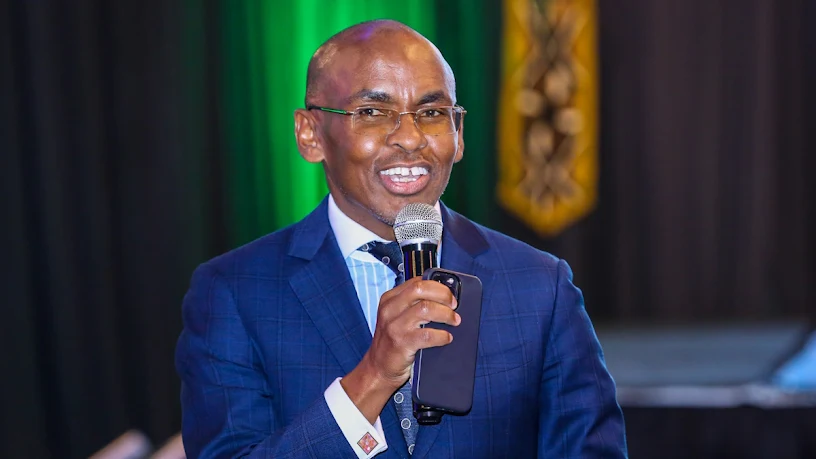
Digital innovation must go beyond technology to deliver meaningful societal impact through trust, adaptive regulation, and human-centred design, Dr. Peter Ndegwa, Group Chief Executive Officer of Safaricom PLC (Kenya and Ethiopia), has said.
In a long-form LinkedIn post, Dr. Ndegwa noted that Africa’s youthful population will see one in four people on Earth being African by 2050, positioning the continent at the centre of global conversations on labour markets, consumption, investment, climate strategy, and the future of work.
“Digital is the default foundation from the outset in many sectors,” he observed. However, he stressed that technology alone is insufficient without trust, adaptive regulation, and human-centred design.
“Technology must improve livelihoods, deepen inclusion, create dignity, and expand opportunity. Its value should be measured not simply by scale or profitability, but by its societal impact,” Dr. Ndegwa said.
Looking ahead, he noted that by 2050, one in four people on Earth will be African, making the continent central to global discussions on labour markets, consumption, investment, climate strategy, and the future of work.
“The world is beginning to look to Africa not only for markets, but for insight,” Dr. Ndegwa concluded. “And Africa must be ready for this.”
Dr. Ndegwa’s remarks reflect Safaricom’s leadership in driving digital transformation and ecosystem innovation across Kenya and Ethiopia.
Meanwhile, Dr. Ndegwa said Africa is no longer just a recipient of global business models but a key contributor with hard-earned lessons in resilience and innovation that the world can no longer ignore,
Dr. Ndegwa challenges the long-standing narrative of Africa as a land of deficits, infrastructure gaps, financial exclusion, energy shortages, and digital divides. He argues that this outdated view fails to capture the continent’s growing relevance in a world facing widespread geopolitical, economic, and technological disruption.
“African businesses have long operated in environments where complexity is not the exception, but the norm. They have learned how to innovate amid volatility, adapt under constraint, and build resilience with fewer buffers,” Dr. Ndegwa said. “In many ways, Africa has been preparing for the future the world is now entering.”
ALSO READ: MTN NIGERIA ELEVATES BUKOLA AJAYI AS NEW CIO
He pointed to the COVID-19 pandemic as a powerful illustration of African adaptability. While exposing vulnerabilities globally, the crisis highlighted how informal systems and digital solutions became engines of resilience. The rapid expansion of mobile-first innovations, particularly digital payments, demonstrated the continent’s capacity to respond with speed and creativity.
A prime example, he noted, is M-PESA, which evolved from a simple financial access tool into a globally studied model of digital inclusion. Its success, Dr. Ndegwa emphasised, stemmed not just from technology but from robust ecosystem thinking involving progressive regulation, partnerships, agent networks, and cross-sector collaboration.
“Africa is demonstrating that innovation succeeds not through isolated platforms, but through ecosystems built on adaptability, inclusion, and shared value creation,” he said. “This shift from competition alone to co-creation may prove to be one of the continent’s most transferable lessons to the global economy.”
Dr. Ndegwa highlighted rising intra-African investment and trade, supported by the African Continental Free Trade Area (AfCFTA), as a defining economic trend. He also underscored the continent’s demographic advantage, its youthful, digitally native population, which positions Africa to leapfrog legacy systems in sectors such as healthcare, agriculture, finance, and education through technologies like artificial intelligence.


